



Decluttering Your Space: Rent a Dumpster for Spring Cleaning
Spring cleaning sounds refreshing in theory. In practice, it usually means standing in the middle of a garage surrounded by four broken lawnchairs, a treadmill that became a coat rack, and boxes from a move you made years earlier. If the sheer volume of stuff has been keeping you from starting, a dumpster for decluttering changes everything. Instead of making fifteen trips to the landfill or stacking junk on the curb and hoping for the best, you get one container, one pickup, and one very satisfying moment when it rolls away.
This guide walks you through sorting, room-by-room planning, sizing, and a realistic one-week schedule to get it done.
Why Renting a Dumpster Makes Spring Cleaning Easier
Traditional cleanouts are a logistical headache. You fill your car, drive to the transfer station, wait in line, pay a dump fee, drive home, and repeat until you run out of time or motivation, whichever comes first. A residential dumpster rental eliminates all of that. The container sits in your driveway for days, ready whenever you are, and gets hauled away when you are done.
For larger projects, the difference is even more dramatic. Hoarding cleanup services and whole-home cleanouts generate far more volume than a standard trash haul can handle. Having a dedicated container means you can work in bursts, tackle one room at a time, and keep your momentum without scheduling pickups around someone else’s timetable. It is also safer. You are not lugging heavy items across town or stacking overfull bags on the curb.

Pre-Sort Strategy: Keep, Donate, Recycle, Dispose
Before anything goes in a bag or a bin, you need a system. The four-category approach is the backbone of every successful decluttering project. Label four zones or containers in your workspace: Keep, Donate, Recycle, and Dispose. Every item gets sorted before it moves anywhere. This prevents the classic mistake of throwing out something you needed or donating something that belongs in the trash.
For decision-making, lean on a few simple questions. When did you last use it? Would you buy it again today? Is it broken with no realistic plan to fix it? Sentimental items deserve a beat of honest reflection, but they should not become an excuse to keep everything. Local donation centers, furniture banks, and textile recyclers can absorb far more than most people expect, which means less guilt about letting things go.
How to Avoid Decision Fatigue
Decision fatigue is real, and it is the number one reason people bail on a cleanout halfway through. Set a timer for 30 to 45 minutes per session and work until it goes off, then take a break. Apply the one-year rule without negotiation: if you have not used it in twelve months and it is not seasonal, it goes. And resist the urge to be perfect. A good cleanout where 80 percent of decisions are easy is better than a paralyzed cleanout where nothing leaves the house.
Room-by-Room Decluttering Plan
Tackling the whole house at once is how people end up with piles in every room and nothing actually finished. Break it into zones and work through them one at a time.
Kitchen and Pantry
Start with the easy wins. Expired food, duplicate gadgets, appliances that have not been plugged in since the previous administration, and anything that lives in the cabinet because you feel bad throwing it away. The kitchen is usually the fastest room to declutter because most decisions are obvious. If it is broken, expired, or has three identical backups, it goes.
Living Room and Bedrooms
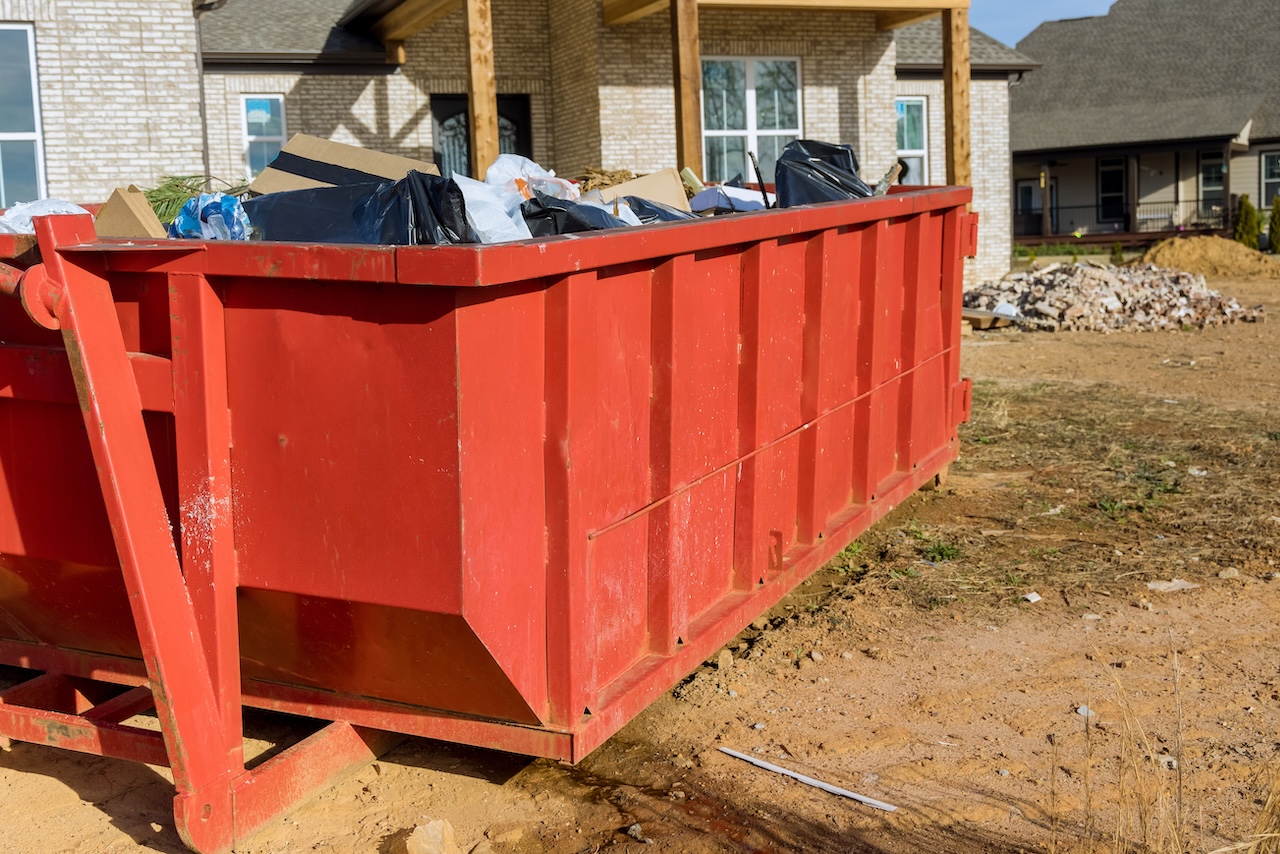
Old furniture that no longer fits the space, decor that has been collecting dust for years, and clothing that has not left the closet in two seasons are all fair game. Be honest about the furniture. A piece that is too worn to donate and too bulky to ignore is exactly what the dumpster is there for. Bulk trash removal for oversized items is one of the biggest practical advantages of renting a container.
Garage, Basement, and Attic
This is where a dumpster for hoarding situations earns its keep. Garages and basements are where junk goes to become permanent. Storage boxes that have never been opened, tools for projects that never happened, and mystery items that nobody can identify are all fair targets. Work in sections and load directly into the dumpster as you go rather than creating a staging pile. It keeps the space from feeling more chaotic than when you started.
Yard and Outdoor Spaces
Yard waste disposal from spring cleanup is often underestimated. Branches from winter storms, broken outdoor furniture, old pots, and accumulated debris can fill a dumpster faster than you expect. Most roll-off containers accept yard waste alongside household junk, which saves a separate trip to a compost facility.
Choosing the Right Dumpster Size for Your Project
Dumpster size directly affects your cost and your stress level. Too small and you are paying for a swap or making extra haul trips. Too large and you are paying for space you did not need. Use this guide as a starting point:
| Size | Ideal Use Case | Capacity | Typical Weight Limit |
| 10-yard | Small rooms, light decluttering | ~3 pickup loads | 1 to 2 tons |
| 20-yard | Garage and basement cleanouts | ~6 pickup loads | 2 to 3 tons |
| 30-yard | Whole-home decluttering | ~9 pickup loads | 3 to 5 tons |
| 40-yard | Hoarding or major renovations | ~12 pickup loads | 4 to 6 tons |
When in doubt, size up. The price difference between one size and the next is usually modest compared to the cost of an overage fee or a second delivery. If your project is on the border between two sizes, choose the larger one and load it strategically.
10-yd Dumpsters

- Dimensions: 3.5 ft High, 8 ft wide & 10 ft long
- Weight limit: 2,000 lbs (1 ton)
- Best for: single-room remodels, home cleanouts & small landscaping jobs
- Average pricing: $200 to $575 per haul
15-yd Dumpsters

- Dimensions: 4 ft High, 8 ft wide & 12 ft long
- Weight limit: 2,000 lbs (1 ton)
- Best for: residential cleanouts, small home renovations & construction projects
- Average pricing: $250 to $650 per haul
20-yd Dumpsters

- Dimensions: 4.5 ft High, 8 ft wide & 22 ft long
- Weight limit: 4,000 lbs (2 tons)
- Best for: medium-scale renovation projects or remodels
- Average pricing: $275 to $700 per haul
30-yd Dumpsters
- Dimensions: 6 ft High, 8 ft wide & 22 ft long
- Weight limit: 6,000 lbs (3 tons)
- Best for: new construction, large scale renovations & demolitions
- Average pricing: $300 to $725 per haul
40-yd Dumpsters
- Dimensions: 8 ft High, 8 ft wide & 22 ft long
- Weight limit: 8,000 lbs (4 tons)
- Best for: commercial construction projects, landscaping & disaster clean-up
- Average pricing: $350 to $800 per haul
Preparing Your Driveway and Property
A loaded dumpster is heavy, and driveways, especially older concrete or asphalt ones, can crack under that weight if you are not careful. Place plywood sheets under the container’s wheels and base to distribute the load and protect the surface. Most rental companies can advise on placement, but the general rule is to position the bin as close to your work zone as possible without blocking the street or a neighbor’s access.
If the only available placement is on a public street, check with your city first. Many municipalities require a permit for street-parked containers. HOA communities may also have rules about visible dumpsters. A quick call before delivery saves a headache later.
What You Can and Cannot Throw in a Dumpster
Most household junk is completely fine for a standard roll-off container. Furniture, clothing, kitchenware, toys, yard debris, and general clutter are all acceptable in the vast majority of cases.
Restricted or Prohibited Items
A few categories require special handling and are off-limits for most dumpster rentals:
- Hazardous waste including paint, solvents, pesticides, and pool chemicals
- Batteries, both household and automotive
- Motor oil and other automotive fluids
- Electronics and appliances, which may carry extra fees depending on local rules
- Tires and mattresses, which often incur additional disposal charges
- Asbestos-containing materials
Always request a full prohibited items list from your rental provider before you start loading. Finding out at pickup that the container cannot be accepted because of a few prohibited items is an expensive and avoidable surprise.
Smart Loading Tactics to Maximize Space
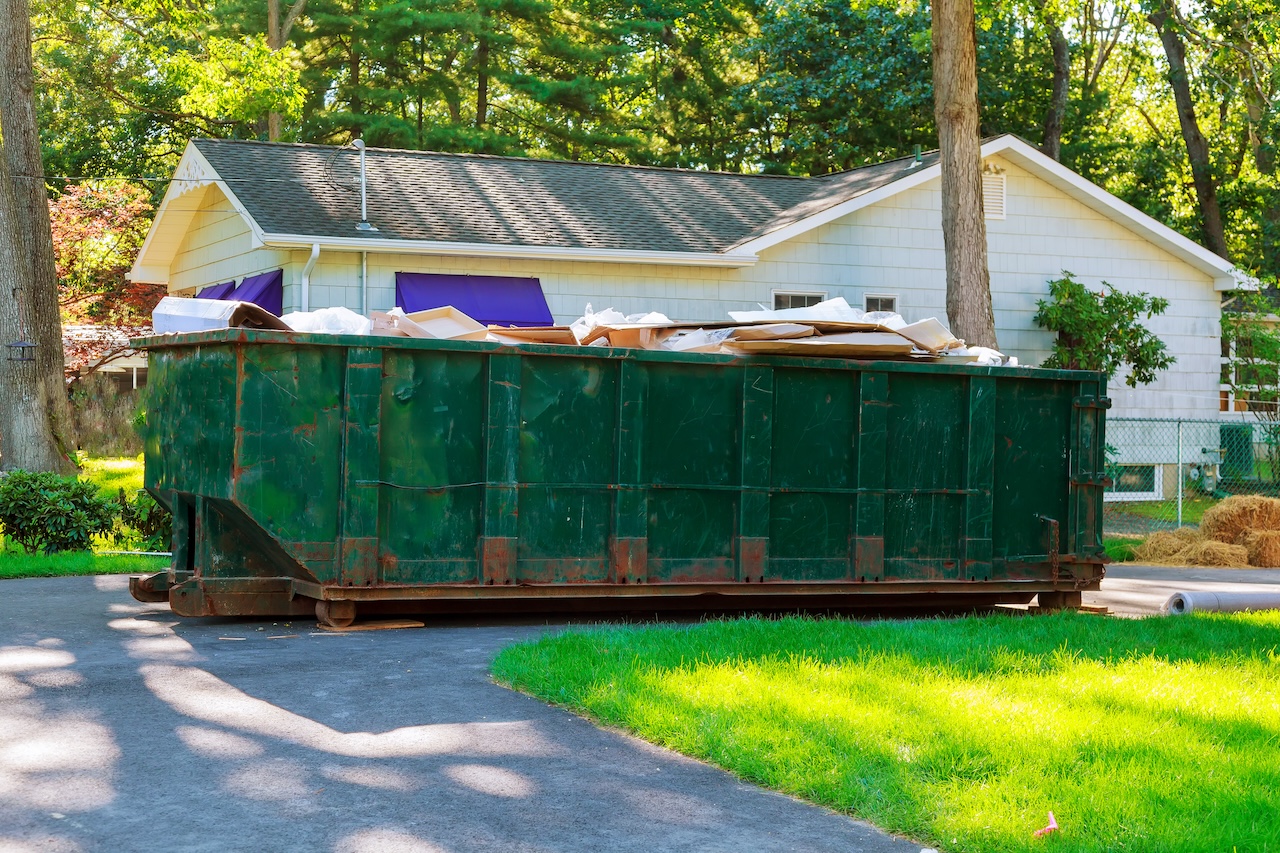
How you load the dumpster determines how much you can actually fit. A haphazard approach wastes a surprising amount of space and can push you into overage territory.
Break Down Bulky Items
Disassemble furniture before it goes in. A bed frame broken into its components takes a fraction of the space of a frame tossed in whole. Same goes for shelving units, desks, and large boxes. A few minutes of disassembly at the source saves significant space in the container.
Distribute Weight Evenly
Do not stack all the heavy material on one side. Concrete, tile, and dense wood should be spread across the floor of the container to keep the load balanced. Uneven loads can create problems during transport and may result in additional fees.
Layering Strategy
Start with flat, heavy items along the bottom, then layer smaller and lighter debris on top. Loose, irregular items like branches and bags of yard waste go in last. Never fill the container above the rim. Overfilled dumpsters cannot be transported legally, and the rental company will ask you to remove the excess before pickup.
One-Week Spring Cleaning Schedule
A week is enough time to complete a full home cleanout if you treat each day as a dedicated work session. Here is a realistic breakdown:
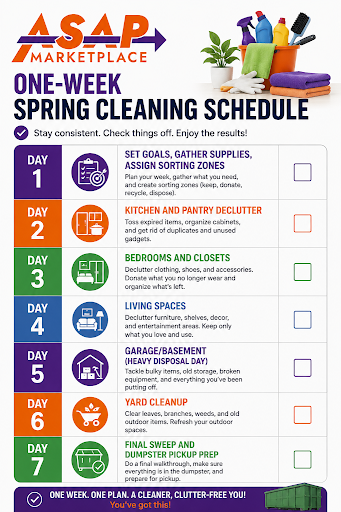
Stick to the schedule as closely as you can, but build in buffer time. Day 5 tends to run long for most households since the garage and basement hold the most volume. If you finish a day early, use the extra time to sort donations and get them out of the house before the final sweep.
Common Mistakes to Avoid During Decluttering
- Renting a dumpster that is too small and hitting your limit before the garage is empty
- Waiting until the last minute to schedule pickup, especially during peak spring season when demand is high
- Skipping the prohibited items check and causing a rejected load
- Trying to do the entire house in a single day and burning out before the hard rooms are done
- Forgetting to protect the driveway and ending up with cracked pavement under the container
Ready to Start? Book Through ASAP Marketplace
Spring fills up fast, and so do dumpster schedules. Whether you need a 10-yard bin for a quick bedroom purge or a 40-yard container for a dumpster for hoarding situation, ASAP Marketplace connects you with local providers offering transparent pricing, flexible pickup windows, and easy swaps if your project runs longer than expected.
Book early, beat the seasonal rush, and get that driveway back. Visit ASAP Marketplace to compare sizes, check availability, and lock in your rental before the first big dump run of the season.
10-yd Dumpsters
- Dimensions: 3.5 ft High, 8 ft wide & 10 ft long
- Weight limit: 2,000 lbs (1 ton)
- Best for: single-room remodels, home cleanouts & small landscaping jobs
- Average pricing: $200 to $575 per haul
15-yd Dumpsters
- Dimensions: 4 ft High, 8 ft wide & 12 ft long
- Weight limit: 2,000 lbs (1 ton)
- Best for: residential cleanouts, small home renovations & construction projects
- Average pricing: $250 to $650 per haul
20-yd Dumpsters
- Dimensions: 4.5 ft High, 8 ft wide & 22 ft long
- Weight limit: 4,000 lbs (2 tons)
- Best for: medium-scale renovation projects or remodels
- Average pricing: $275 to $700 per haul
30-yd Dumpsters
- Dimensions: 6 ft High, 8 ft wide & 22 ft long
- Weight limit: 6,000 lbs (3 tons)
- Best for: new construction, large scale renovations & demolitions
- Average pricing: $300 to $725 per haul
40-yd Dumpsters
- Dimensions: 8 ft High, 8 ft wide & 22 ft long
- Weight limit: 8,000 lbs (4 tons)
- Best for: commercial construction projects, landscaping & disaster clean-up
- Average pricing: $350 to $800 per haul
