


What Impacts Portable Toilet Rental Pricing? A Site Service Breakdown
Portable toilet rental pricing varies more than most customers expect. Whether you are managing a construction site, planning an outdoor wedding, or coordinating emergency relief efforts, the cost of renting portable restrooms depends on a combination of project requirements, logistics, and timing. Understanding portable toilet rental pricing factors before you book helps you budget accurately, avoid hidden fees, and choose the right setup for your needs.
This guide breaks down every major cost driver so you can make a confident, informed decision when requesting quotes through ASAP Marketplace Portable Toilet Rentals.
The Main Portable Toilet Rental Pricing Factors
No two rental projects are identical, which is why portable toilet rental costs are not one-size-fits-all. Several variables work together to determine your final quote, and understanding each one gives you more control over your budget.
The primary pricing factors include the type of unit you rent, the length of your rental period, how frequently the units need to be cleaned and serviced, the accessibility of your delivery location, local permit requirements, seasonal demand in your area, and whether your project requires emergency or rush delivery.
| Pricing Factor | How It Affects Cost | Typical Impact |
|---|---|---|
| Unit Type | Luxury units cost more than standard | Medium to High |
| Rental Duration | Longer rentals may reduce daily rate | Medium |
| Service Frequency | More cleanings increase cost | High |
| Location Access | Difficult delivery areas add fees | Medium |
| Permits | City and event permits vary by location | Low to Medium |
| Seasonal Demand | Peak season rates increase | Medium |
| Emergency Delivery | Same-day delivery premiums apply | High |
Each of these factors is explored in depth below so you can anticipate costs before your project begins.
How Portable Toilet Type Affects Rental Pricing
The unit you choose is one of the single largest drivers of portable toilet rental pricing. From basic sanitation to luxury amenities, each category comes with its own cost structure.
Standard Portable Toilets
Standard portable toilets are the most affordable option available and the most widely used across the country. They are best suited for construction sites, agricultural operations, and basic outdoor events where function matters more than comfort. A standard unit typically includes a waste tank, toilet seat, toilet paper holder, and a hand sanitizer dispenser. Because they require minimal maintenance between service visits and are straightforward to transport, they carry the lowest per-unit cost of any category.
Deluxe and Flushable Units
Deluxe and flushable portable toilets offer a step up in comfort and are a popular choice for family events, festivals, and venues where guests expect cleaner facilities. These units often include a flushing mechanism, a hand-washing sink with fresh water, soap dispensers, and a more finished interior. Because they require a water supply connection or onboard tank and generate more wastewater, servicing them is more involved, and that additional maintenance requirement is reflected in higher rental pricing.
ADA-Compliant Portable Toilets
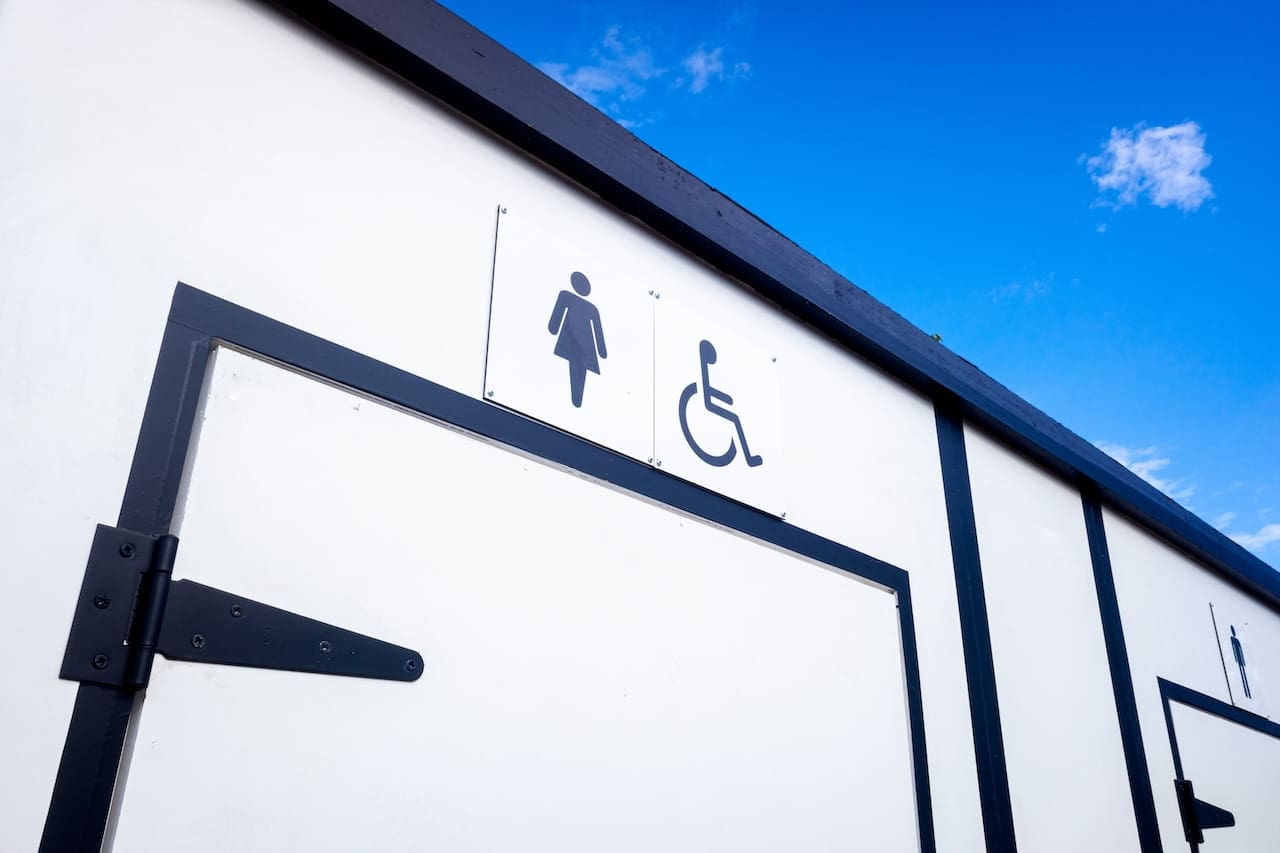
ADA-compliant portable toilets are required any time an event or worksite must meet federal accessibility standards. These units have a larger footprint to accommodate wheelchair users, include grab bars, and feature a lower toilet height. Their size makes them heavier and more complex to transport, which adds to both delivery and servicing costs. If you are hosting a public event or running a federally regulated construction project, budgeting for at least one ADA unit is not optional.
Luxury Restroom Trailers
Luxury restroom trailers sit at the top of the pricing spectrum and are the preferred choice for weddings, corporate events, VIP gatherings, and upscale outdoor venues. These trailers feature climate control through HVAC systems, interior lighting, mirrors, running water, flushing toilets, and finished cabinetry. The premium experience comes with a premium cost driven by the trailer’s complexity, the equipment required to service it, and the specialized transportation it demands. You can learn more about unit options in our Portable Toilet Type Guide.
| Unit Type | Best Use Case | Relative Cost |
|---|---|---|
| Standard Unit | Construction sites | $ |
| Flushable Unit | Family events | $$ |
| ADA Unit | Public and compliant events | $$ |
| Luxury Trailer | Weddings and VIP events | $$$$ |
Rental Duration and Long-Term Pricing Considerations
How long you need the units on site has a direct effect on your total cost and, in many cases, your per-day rate.
Short-Term Rentals
Short-term rentals covering a single weekend or a few days are common for outdoor events, family gatherings, and temporary projects. With short-term agreements, delivery and pickup fees make up a larger proportion of your total bill because there is less time over which to spread those fixed costs. Vendors often apply daily or weekend minimums, so a one-day rental may not be significantly cheaper than a two-day rental.
Long-Term Rentals
Long-term rentals spanning several weeks or months are standard practice on construction sites. Because the delivery and pickup costs are spread across a longer period, the average daily rate tends to decline compared to short-term rentals. However, long-term rentals also accumulate servicing expenses over time, so a lower daily unit cost does not always translate to a lower total invoice. Regular waste removal and restocking are recurring line items throughout the rental period.
Flexible Rental Extensions
Construction timelines and outdoor events rarely go exactly as planned. Unexpected project delays, weather disruptions, or permit issues can all extend the time you need portable restrooms on site. Most rental agreements allow for extensions, but extending a contract after the original end date may trigger additional fees. Planning for a slightly longer rental window than you think you need is a straightforward way to avoid those last-minute surcharges. Use a Portable Toilet Rental Calculator to estimate costs for your specific timeline.
Longer rentals often reduce the per-day cost of the unit itself, but customers should always account for the cumulative servicing expenses that grow alongside the rental length.
Why Servicing Frequency Significantly Impacts Cost
The unit rental is only part of the equation. How often those units are cleaned, pumped, and restocked is one of the highest-impact variables in your final portable toilet rental pricing.
Standard Weekly Service
Weekly service is the baseline for most rental agreements and is appropriate for small construction crews, low-traffic worksites, and light-use applications. A standard service visit includes pumping the waste tank, sanitizing the interior, replenishing toilet paper and hand sanitizer, and inspecting the unit for any damage. This cadence keeps costs predictable and works well when usage is steady and manageable.
High-Traffic Usage Requirements
Large festivals, concerts, marathons, and multi-day outdoor events generate far more usage per unit than a typical worksite. In these situations, weekly service is not sufficient, and vendors may schedule daily or even multiple daily service visits to keep units sanitary and stocked. Each additional service visit adds to the total cost, and high-traffic events should budget accordingly. Underestimating usage and under-servicing units is one of the most common causes of attendee complaints and unexpected additional charges.
Avoiding Over-Servicing
While hygiene is non-negotiable, paying for service visits you do not need is an avoidable expense. Matching your servicing schedule to your actual usage pattern rather than defaulting to the most frequent option can produce meaningful savings over a long project. Discuss your crew size, expected attendance, or daily usage hours with your vendor to identify the right frequency rather than the highest one.
| Service Frequency | Recommended For | Cost Impact |
|---|---|---|
| Weekly | Small crews | Low |
| Twice Weekly | Medium traffic | Medium |
| Daily | Festivals and events | High |

Delivery Location and Accessibility Challenges
Where your units need to go affects how much it costs to get them there and how easily they can be serviced throughout your rental.
Urban vs. Rural Pricing Differences
Urban deliveries benefit from shorter transportation distances and larger local inventories, which generally keeps costs lower. Rural or remote locations require longer drives, more fuel, and sometimes overnight logistics for drivers, all of which are passed on to the customer. If your project is located outside a major metro area, expect delivery fees to reflect the additional mileage and travel time involved.
Difficult Site Access
Some sites are straightforward to access, and some require specialized equipment or additional labor. Mountain terrain, muddy job sites after heavy rain, gated facilities, and locations with low overhead clearance can all complicate delivery. When a standard delivery truck cannot get a unit into position, vendors may need a crane, forklift, or all-terrain vehicle to complete the placement. These equipment and labor requirements are billed separately and can add a significant amount to your project cost.
Multi-Unit and Large Site Logistics
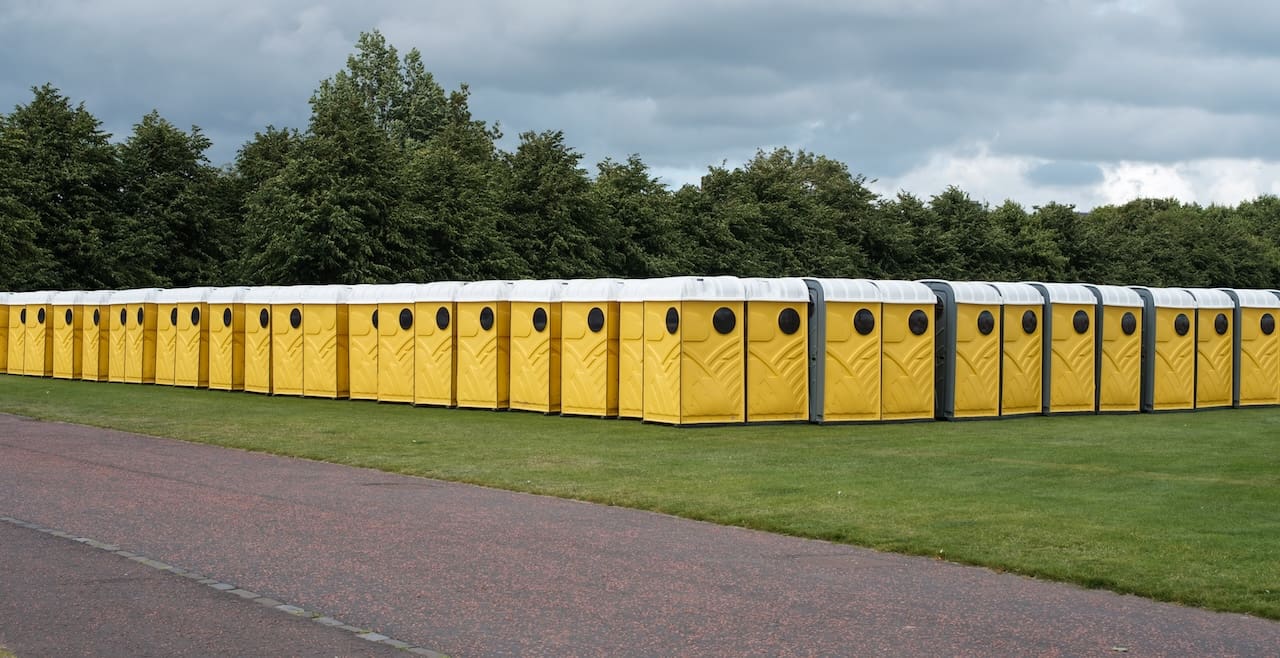
Large construction sites, music festivals, and multi-building campuses often require portable restrooms distributed across several zones. Coordinating multiple drop-off points, sequencing deliveries to minimize disruption, and scheduling service visits across a large footprint adds complexity to fleet management. Vendors account for that complexity in their pricing, particularly when the project requires multiple trucks or extended crew time on site. Regional pricing variability across the U.S. means customers in different markets will experience different baseline rates for the same scope of work.
Permit Requirements and Local Regulations
Permits are not always the first thing that comes to mind when budgeting for portable restrooms, but they can affect both your timeline and your costs.
Event Permit Requirements
Public festivals, street fairs, concerts, and community events held on city or county property almost always require permits. Health departments in many jurisdictions set minimum sanitation ratios for public gatherings, specifying how many portable toilets must be available per expected attendee. Failing to meet those minimums can result in fines or event shutdowns. Factoring in permit timelines before you finalize your rental order helps you avoid last-minute scrambles.
Construction Site Compliance
OSHA sets clear sanitation requirements for construction sites, including minimum restroom counts based on crew size. A site with fewer than 20 workers requires at least one toilet, while larger crews require proportionally more. Failing to meet these requirements can trigger OSHA violations and fines that far exceed the cost of the extra unit. Building permit compliance requirements also vary by municipality and can affect the type of facilities required.
Hidden Administrative Costs
Beyond the base permit fee, administrative costs can include application processing time, inspection fees, and delays caused by incomplete documentation. Street closure permits required for urban event sites, health department approvals tied to food service, and ADA compliance certifications all fall into this category. Building these timelines and potential fees into your planning prevents them from becoming surprises.
| Requirement | May Be Needed For |
|---|---|
| City Event Permit | Public festivals |
| Street Closure Permit | Urban events |
| ADA Compliance | Public attendance events |
| Health Department Approval | Food-serving events |
Seasonal Demand and Emergency Deployment Pricing
Timing your rental can be just as important as choosing the right unit. Market demand and external circumstances have a direct effect on availability and cost.
Peak Event Season Pricing
Spring and summer are the busiest months for portable toilet rentals across most of the United States. Wedding season, outdoor festivals, graduation parties, construction ramp-ups, and public events all compete for the same inventory during these months. Higher demand pushes prices up and reduces the availability of specialty units like luxury trailers and ADA-compliant toilets. Booking early during peak season is the most reliable way to secure the units you need at a competitive price.
Disaster Relief and Emergency Response
Natural disasters including hurricanes, wildfires, and major infrastructure outages create sudden, concentrated demand for portable restrooms in affected areas. Vendors operating in disaster zones contend with damaged roads, limited fuel access, and depleted local inventory. Rush transportation, overtime labor, and expedited logistics all contribute to significantly higher costs during emergency deployments. Customers coordinating disaster relief efforts should expect surcharges and plan for supply constraints that simply cannot be avoided under those conditions.
Booking Early to Control Costs
Outside of emergency situations, advance planning is the single most effective tool for controlling portable toilet rental pricing. Early bookings lock in current rates before seasonal increases take effect, give you access to a wider selection of units, and eliminate the last-minute surcharges that vendors apply when they need to reroute trucks or accelerate delivery timelines. A week or two of lead time is usually sufficient for small projects; large events and long construction projects benefit from booking a month or more in advance.
How to Reduce Portable Toilet Rental Costs Without Sacrificing Quality
Keeping costs reasonable does not require cutting corners on hygiene or service. A few practical strategies go a long way toward optimizing your rental budget.
Choose the Right Number of Units
Renting too few units creates hygiene problems and can put you out of compliance with OSHA or local permit requirements. Renting too many units means you are paying for capacity you are not using. The right number depends on your crew or attendance size, the length of the event or project, and whether the units will be in use all day or only during certain hours. Industry guidelines provide starting points, and a knowledgeable vendor can help you refine the count for your specific situation.
Optimize Servicing Schedules
Rather than defaulting to the most frequent service schedule available, work with your vendor to match the cadence to your actual usage. A construction crew of eight working five days a week has very different servicing needs than a weekend festival drawing thousands of attendees. Getting that calibration right means you pay for the service you actually need rather than the maximum package.
Bundle Services Through One Vendor
Working with a single vendor for delivery, service, and any additional rentals simplifies coordination and often unlocks better pricing. Vendors are more likely to offer competitive bundled rates when a customer is consolidating their needs in one place. If your project also requires waste containers or other site services, bundling those through ASAP Marketplace’s dumpster rentals alongside your portable toilet rental can streamline both logistics and billing.
Request transparent, itemized quotes that break out unit costs, delivery fees, and service charges separately so you can compare vendors accurately and identify any unnecessary line items.
Conclusion
Portable toilet rental pricing is shaped by a combination of unit type, rental duration, service frequency, delivery logistics, permit requirements, and market timing. No single factor determines your cost in isolation; the final number reflects all of these variables working together. Understanding each one puts you in a stronger position to plan, budget, and avoid unnecessary fees from the start.
Working with ASAP Marketplace makes it easier to compare transparent quotes, identify the right servicing schedule for your usage, select the unit types that match your project requirements, and keep costs in line with your budget. Whether you are coordinating a large outdoor event or managing a long-term construction site, the right portable toilet rental pricing approach begins with the right information. Start your quote with ASAP Marketplace today. Bundle your dumpster rental with us!
